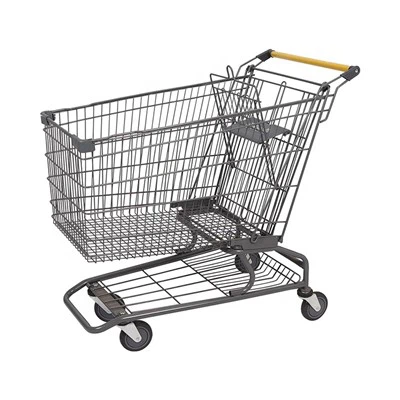

As a supplier in the plastic trolley cart industry, I often get asked about the ease of replacing the wheels on a plastic trolley cart. This is a crucial aspect for many customers, as it directly impacts the maintenance cost and lifespan of the cart. In this blog, I'll delve into the details of wheel replacement, sharing insights based on my experience in the field.
Understanding the Basics of Plastic Trolley Carts
Before we discuss wheel replacement, it's essential to understand the types of plastic trolley carts available. Our company offers a wide range of products, including Plastic Trolley Cart, Heavy Duty Plastic Trolley, and Plastic Trolley for Supermarket. Each type is designed to meet different needs, whether it's for light - duty use in a home or heavy - duty applications in a commercial setting.
The wheels on these carts play a vital role. They need to provide smooth movement, support the weight of the load, and withstand regular use. Over time, however, wheels can wear out due to factors such as friction, uneven surfaces, and heavy loads.
Factors Affecting Wheel Replacement
Design and Construction
The design of the plastic trolley cart significantly influences how easy it is to replace the wheels. Some carts are designed with a simple and accessible wheel - mounting system. For example, certain models have a snap - on or screw - on wheel mechanism. In these cases, replacing the wheels can be as easy as removing a few screws or popping off the old wheel and attaching the new one.
On the other hand, some carts may have a more complex wheel - mounting design. These could involve specialized fasteners or integrated wheel assemblies. Replacing the wheels on such carts may require more time and technical skills.
Wheel Type
The type of wheel also matters. There are different materials used for wheels, such as rubber, plastic, and polyurethane. Rubber wheels are common due to their good traction and shock - absorption properties. Plastic wheels are lightweight and often more affordable. Polyurethane wheels offer a balance between durability and performance.
The attachment method of the wheel to the cart can vary depending on the type. For instance, rubber wheels may be attached using a hub and axle system, while plastic wheels might have a more straightforward snap - in design.
Tools Required
The ease of wheel replacement is also affected by the tools needed. In most cases, basic tools like a screwdriver or a wrench are sufficient for simple wheel replacement. However, for more complex wheel - mounting systems, specialized tools may be required. For example, if the wheel is attached with a special nut or bolt that requires a specific socket size, you'll need to have the appropriate tool on hand.
Step - by - Step Guide to Wheel Replacement
Step 1: Gather the Necessary Tools
As mentioned earlier, the tools required depend on the wheel - mounting system. For a standard screw - on wheel, a screwdriver will usually suffice. If it's a more complex system, you may need a wrench, pliers, or a socket set.
Step 2: Prepare the Cart
Before starting the wheel replacement, make sure the cart is on a stable surface. If possible, empty the cart to reduce its weight and make it easier to handle.


Step 3: Remove the Old Wheel
If the wheel is attached with screws, use the screwdriver to remove them. If it's a snap - on wheel, gently pry it off using a flat - head screwdriver or your fingers. Be careful not to damage the cart or the wheel during this process.
Step 4: Inspect the Wheel Mounting Area
Once the old wheel is removed, inspect the wheel mounting area for any damage or debris. Clean the area if necessary to ensure a proper fit for the new wheel.
Step 5: Install the New Wheel
Align the new wheel with the wheel mounting area. If it's a screw - on wheel, insert the screws and tighten them securely. For a snap - on wheel, press it firmly into place until it clicks.
Step 6: Test the Wheel
After installing the new wheel, give the cart a gentle push to test the wheel's movement. Make sure it rotates smoothly and that the cart moves in a straight line.
Common Challenges and Solutions
Wheel Alignment
One common challenge during wheel replacement is ensuring proper wheel alignment. If the wheels are not aligned correctly, the cart may not move smoothly or may veer to one side. To solve this problem, you can use a straightedge to check the alignment of the wheels. Adjust the position of the wheel if necessary until it is properly aligned.
Stuck Wheels
Sometimes, the old wheel may be stuck due to rust or debris. In this case, you can try using a lubricant such as WD - 40 to loosen the wheel. Let the lubricant sit for a few minutes before attempting to remove the wheel again.
Incompatible Wheels
It's important to ensure that the new wheel is compatible with the cart. Check the size, type, and attachment method of the wheel before purchasing. If you're unsure, consult the cart's manual or contact the manufacturer for guidance.
Why Choose Our Plastic Trolley Carts
Our company takes pride in providing high - quality plastic trolley carts that are designed with ease of maintenance in mind. Our carts are engineered to have user - friendly wheel - mounting systems, making wheel replacement a straightforward process.
We also offer a wide range of replacement wheels, ensuring that you can find the perfect fit for your cart. Whether you need a rubber wheel for better traction or a plastic wheel for a lightweight option, we have you covered.
Conclusion
In conclusion, the ease of replacing the wheels on a plastic trolley cart depends on several factors, including the design of the cart, the type of wheel, and the tools required. With the right knowledge and tools, wheel replacement can be a relatively simple task.
If you're in the market for a plastic trolley cart or need replacement wheels, we invite you to explore our product range. Our team is always ready to assist you with any questions you may have. Contact us today to start a procurement discussion and find the perfect solution for your needs.
References
- General knowledge from years of experience in the plastic trolley cart industry.
- Manufacturer's manuals for various plastic trolley cart models.